
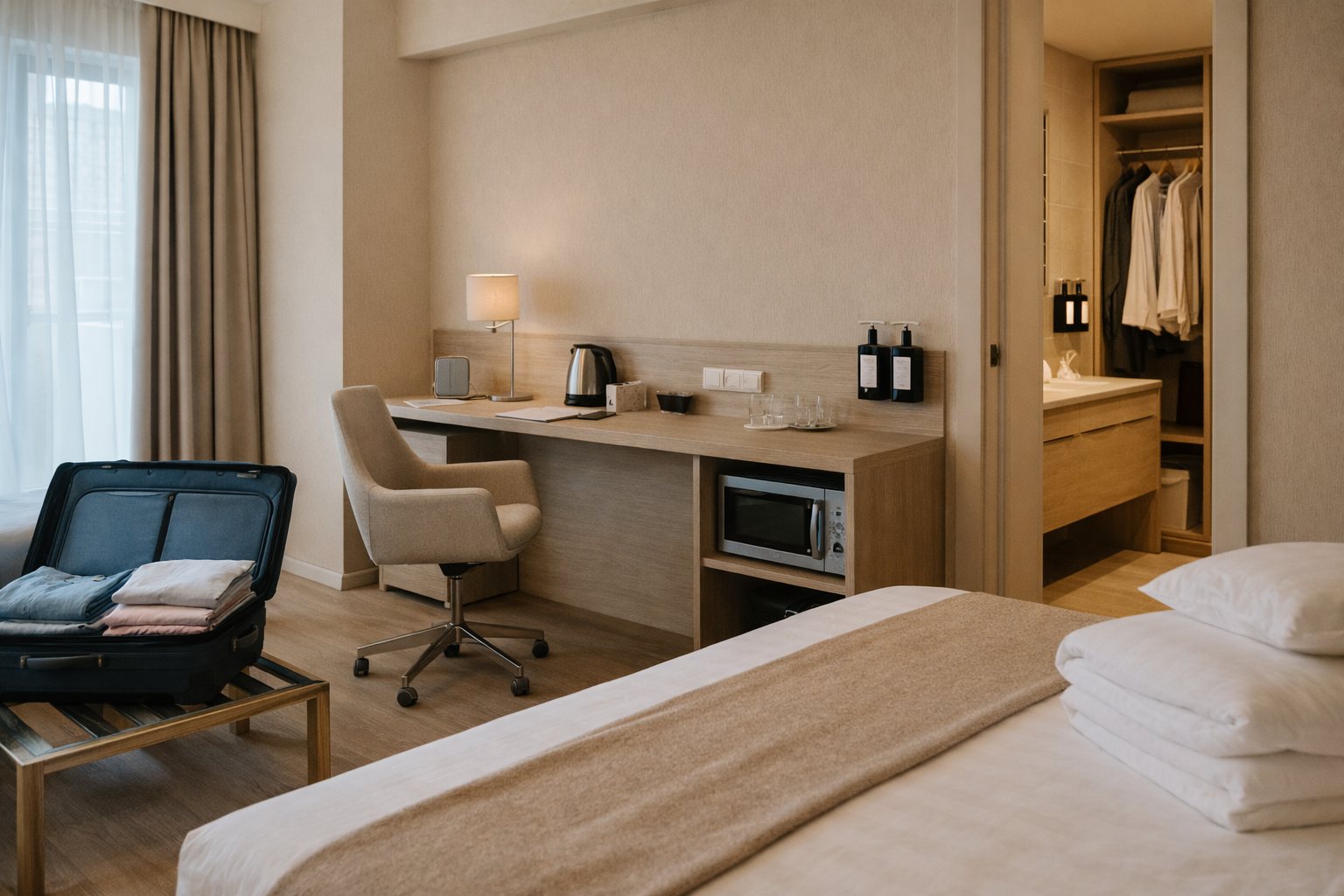
Long-Stay Hotel Rooms: How Smart Design Increases Occupancy and Guest Satisfaction
The hotel market is evolving rapidly, and a growing share of bookings now comes from long-stay guests. Project workers, international employees, digital nomads, medical visitors, and extended business travelers all have very different expectations compared to overnight guests.
For these travelers, a hotel room is not just a place to sleep – it becomes a temporary home, a workspace, and a place to recharge. For hotels, long-stay guests mean more stable occupancy, fewer turnovers, and better operational predictability.
What qualifies as a long-stay hotel guest?
In hotel operations, long-stay typically refers to:
-
stays of 7 nights or more,
-
often 2–4 weeks or longer,
-
guests who value functionality, comfort, and consistency over daily luxury services.
While long-stay guests are less likely to move frequently, they are highly sensitive to poorly designed rooms. When satisfied, they extend their stay and return.
What makes a hotel room truly long-stay friendly?
1. Storage space – the most underestimated factor
One of the most common mistakes hotels make is offering the same limited storage used for short stays.
A long-stay room should include:
-
a larger or segmented wardrobe,
-
sufficient hangers and shelving,
-
drawers for personal belongings,
-
a luggage rack that can remain in use permanently.
Guests do not want to live out of a suitcase for weeks. Organization directly impacts comfort and satisfaction.
2. A comfortable workspace inside the room
Most long-stay guests work at least part-time during their stay.
Essential elements:
-
a stable desk with adequate surface area,
-
an ergonomic chair (not just decorative),
-
proper task lighting,
-
easily accessible power outlets and USB ports.
A poorly designed workspace is a frequent source of negative reviews for extended-stay hotels.
3. Beds and textiles designed for long-term use
Sleep quality becomes even more critical during longer stays.
Recommended features:
-
durable, hotel-grade bed linen,
-
mattress protectors to extend mattress lifespan,
-
multiple pillow options (soft / medium),
-
easy-to-wash bed throws or covers.
Hotelroom-branded solutions focus on hospitality-grade textiles that maintain quality even after weeks of continuous use.
4. Bathrooms focused on functionality
Long-stay guests bring their own toiletries and need space.
A well-designed long-stay bathroom offers:
-
additional shelving or counter space,
-
dispenser systems instead of single-use bottles,
-
enough towels for multi-day use,
-
flexible towel replacement policies rather than daily changes.
For extended stays, practicality and usability matter more than decorative design.
5. Small kitchen features with big impact
A full kitchen is not necessary, but these additions make a difference:
-
electric kettle,
-
multiple mugs and glasses,
-
microwave in the room or shared area,
-
basic cutlery set.
These low-cost elements significantly increase comfort and length of stay.
6. Optimizing housekeeping for long-stay guests
Long-stay room concepts allow:
-
less frequent but more thorough cleaning schedules,
-
reduced linen turnover,
-
clearly defined housekeeping routines.
This lowers operational costs while giving guests flexibility and a sense of control.
Why long-stay rooms make financial sense
From the hotel’s perspective:
-
more stable occupancy during low seasons,
-
fewer check-ins and check-outs,
-
improved cost efficiency per room.
From the guest’s perspective:
-
higher comfort levels,
-
a feeling of having a temporary home,
-
stronger loyalty to the property.
How Hotelroom supports long-stay hotel concepts
Hotelroom solutions are designed for real hotel operations:
-
textile packages optimized for extended stays,
-
durable, cost-effective products for high usage,
-
unified concepts covering rooms, bathrooms, and accessories,
-
products that simplify housekeeping workflows.
A well-designed long-stay room is not a luxury – it is a strategic investment that delivers predictable revenue and long-term guests.
