
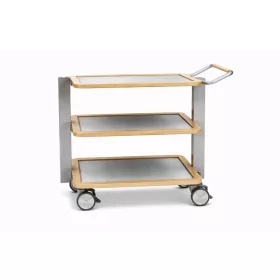
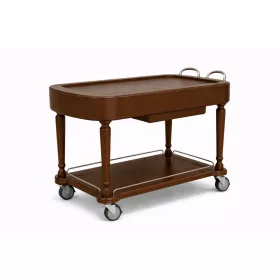
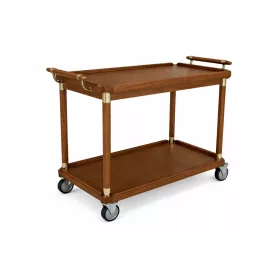
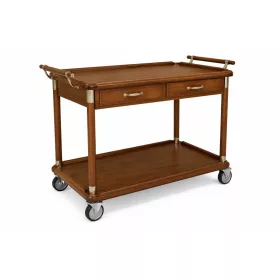
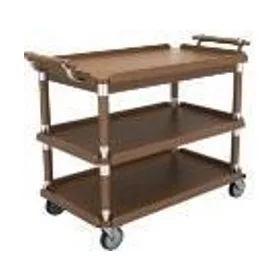
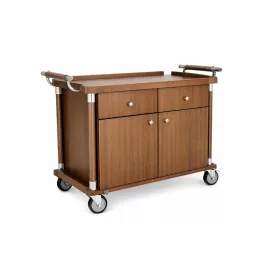
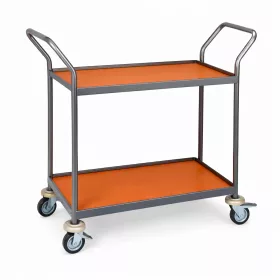
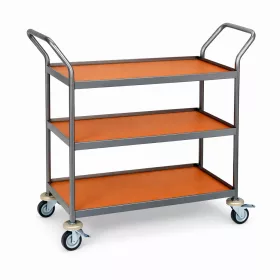
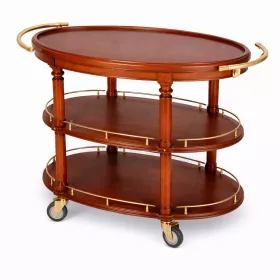
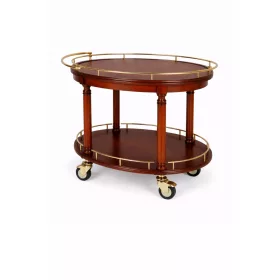
Service and serving trolleys – brings together the general-purpose two- and three-shelf trolleys used in restaurants, conference areas and lounges to clear tables, carry crockery, deliver drinks and move service equipment. Construction ranges from stainless steel and coated steel to wood-effect finishes for guest-facing use. The choice depends on the load, the floor surfaces, the visibility of the trolley to guests and whether the unit is washed down after service.
When asking for a quotation, state the typical load, the number of shelves needed, the floor types on the route and whether the trolley is used in front of guests or only behind the scenes. Shelf dimensions, clear height between shelves, load capacity, castor type and finish are shown in the technical description.
Service and serving trolleys: procurement considerations
- Number and spacing of shelves: the clear height between shelves decides whether stacked plates, glass racks or bottle crates actually fit.
- Load capacity: clearing a full section puts more weight on a trolley than expected, so specify against the heaviest realistic load.
- Guest-facing or back-of-house: a wood-effect or brushed finish suits the dining room, while plain stainless steel is the practical choice for service corridors.
- Castors and noise: rubber-tread castors and at least one brake keep the trolley quiet on hard floors and stable when loaded at the table.
Frequently asked questions about this category
How many shelves do we need?
Two shelves suit drinks service and light clearing, while three give more capacity for a full table clear-down; check the clear height between shelves against your plate stacks and glass racks.
Can the same trolley be used for clearing and for serving?
It can, provided the finish is presentable and the shelves are cleaned between the two tasks; many operations keep separate units to avoid carrying used crockery back into the dining room.
