
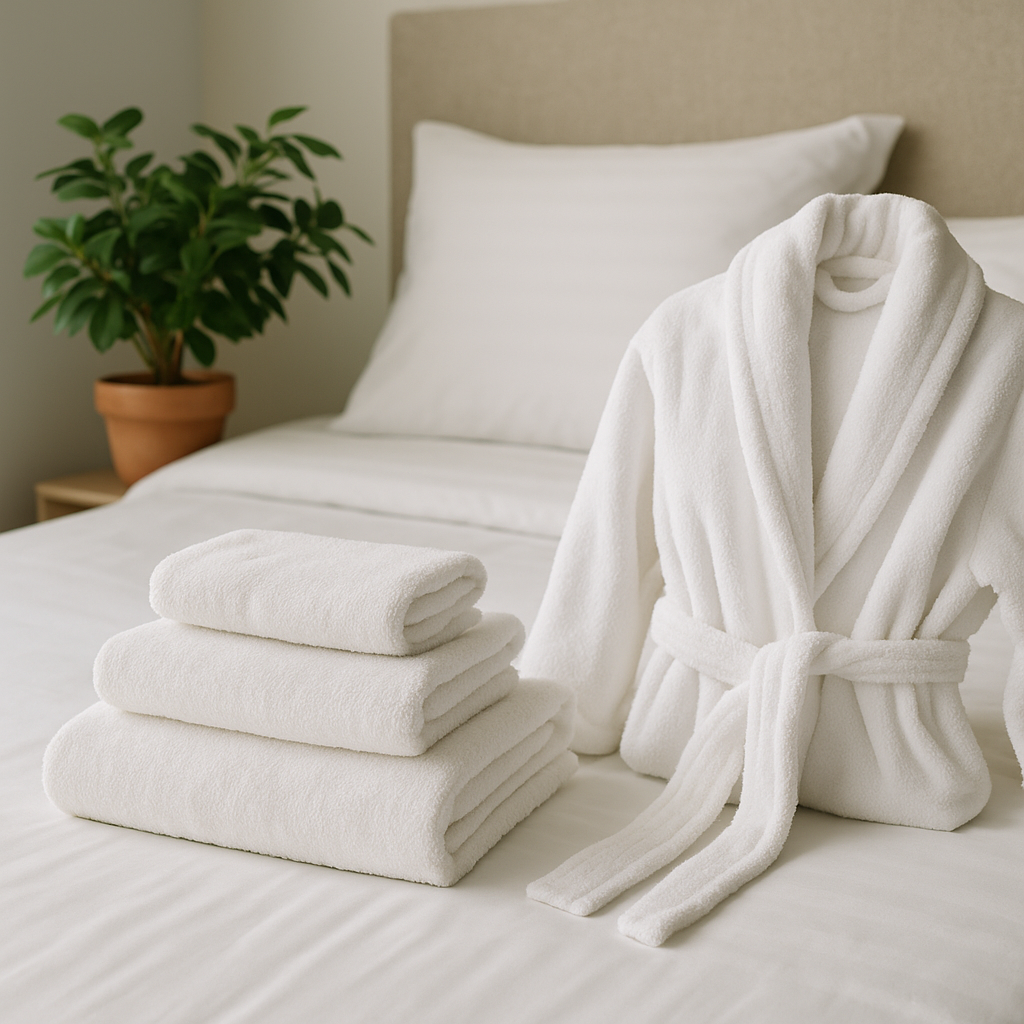
Why hotel-grade textiles matter more than ever
In modern hospitality, textiles are one of the most tangible parts of the guest experience. Guests immediately notice if a towel is thin, scratchy or grey – and those impressions often end up in online reviews.
Using low-cost, retail-quality textiles in a hotel environment usually means:
-
rapid wear and tear,
-
colour loss and shape distortion after a few washes,
-
constant replacement cycles and extra waste.
What makes a textile truly „hotel-grade“?
-
Engineered for intensive laundering
-
Durable yarns and professional weaving techniques.
-
Reinforced hems and seams to withstand industrial washing and drying.
-
-
Colour and shape retention
-
Consistent white or colour tone even after many wash cycles.
-
Stable dimensions that fit duvets, pillows and beds every time.
-
-
Standardised sizes and weights
-
Streamlined laundry and housekeeping operations.
-
Easier stock management and ordering.
-
Longevity means sustainability
Choosing long-lasting textiles is one of the most effective ways to combine cost control and sustainability:
-
fewer discarded items over time,
-
less frequent manufacturing and transport,
-
lower total cost of ownership per room and per stay.
How Hotelroom.center supports your textile strategy
Through Hotelroom.center you can:
-
build a layered textile programme for different room categories,
-
select the right weight and feel for towels, bed linen and bathrobes,
-
add branding elements such as embroidery or woven labels.
Whether you run a boutique hotel or a larger chain, a coherent textile concept helps you deliver a recognisable, consistent experience in every room.
Short FAQ
What is the typical lifespan of hotel towels and bed linen?
It depends on usage and laundry processes, but hotel-grade textiles are designed to last significantly longer than standard retail products.
How do professional hotel textiles support sustainability?
By lasting longer, they reduce waste, production and transport emissions, while also lowering replacement and purchase frequency.
