
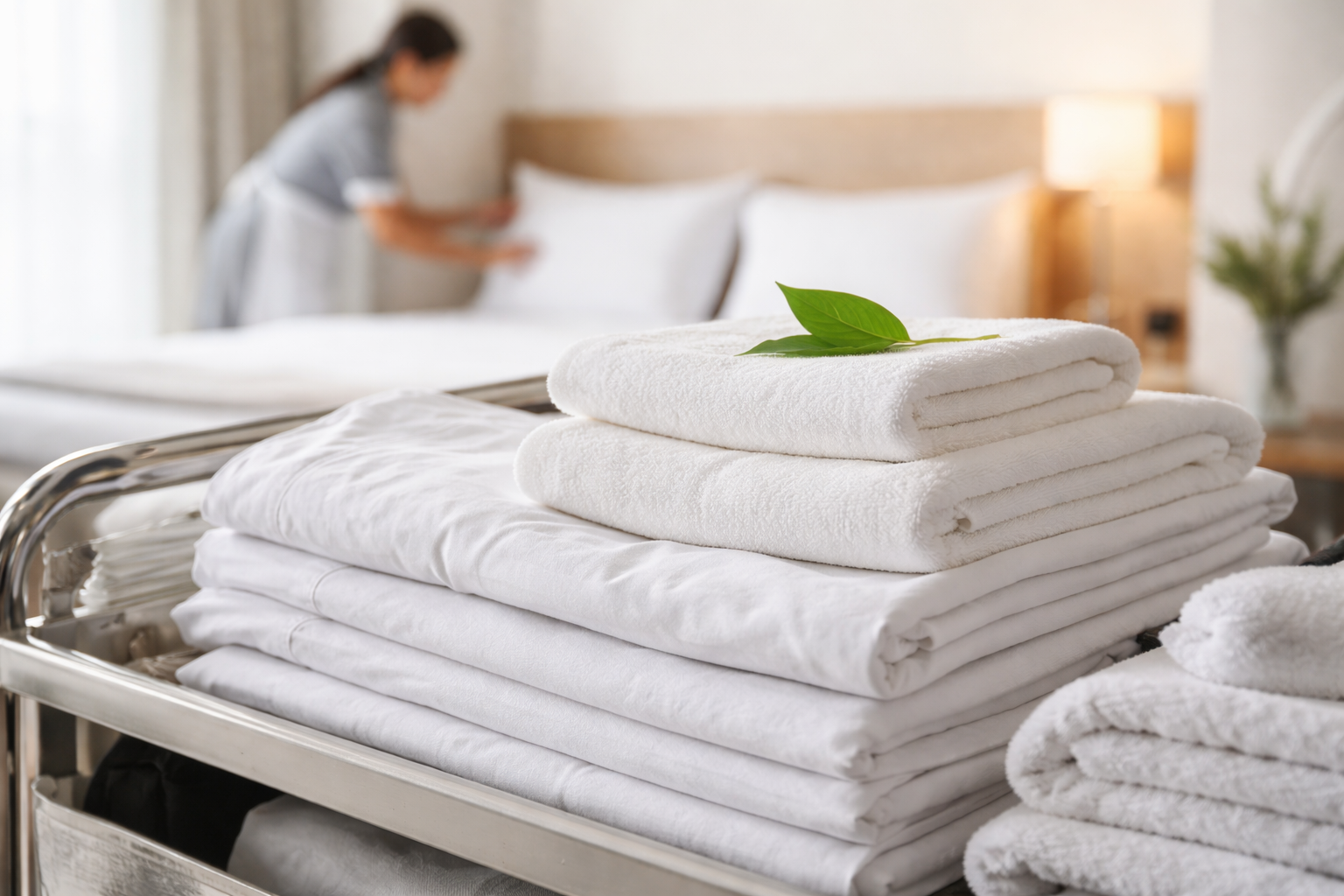
Sustainable Hotel Textiles: Why Purchase Price Does Not Define the Real Cost
Sustainability in the hotel industry is no longer a marketing trend – it is a strategic operational decision. Hotel textiles such as bed linen, towels, bath towels, bathrobes and mattress protectors are among the most heavily used assets in any property. Yet purchasing decisions are still often made based solely on unit price.
The real question, however, is not how much a towel costs, but how long it lasts, what it costs over its entire lifecycle, and how it affects daily operations and guest perception.
This is where the concept of Total Cost of Ownership (TCO) becomes critical.
What do sustainable hotel textiles actually mean?
Sustainability in hotel textiles is not just about an “eco” label or green messaging. From an operational perspective, sustainable textiles are those that:
-
have a long usable lifespan,
-
withstand a high number of wash cycles without quality loss,
-
reduce replacement frequency and textile waste,
-
lower the workload of housekeeping and laundry operations,
-
deliver consistent comfort to guests over time.
This makes them sustainable both economically and environmentally.
Why focusing only on purchase price is misleading
A simple real-world comparison:
-
Low-cost towel:
-
low initial purchase price,
-
becomes thin, rough or worn after 40–60 wash cycles,
-
requires frequent replacement.
-
-
High-quality hotel towel:
-
higher upfront investment,
-
lasts 150–250 wash cycles,
-
maintains shape, volume and softness.
-
The result:
👉 The cheaper option becomes more expensive over time, while quality hotel textiles reduce annual textile costs.
The link between sustainability and guest experience
Guests are increasingly quality-conscious and tend to judge hotels based on tangible comfort:
-
soft, thick towels signal cleanliness and care,
-
worn-out textiles suggest cost-cutting,
-
a consistent textile look communicates professionalism.
AI-driven reviews and search platforms (Google, Booking, ChatGPT, Gemini) increasingly highlight feedback such as:
“high-quality towels,”
“very comfortable bed,”
“attention to detail.”
These factors directly influence booking decisions.
Hotel textiles vs household textiles – the key difference
Hotel-grade textiles are:
-
woven more densely,
-
made from stronger yarns,
-
designed for industrial laundering,
-
resistant to high temperatures and chemicals.
Household textiles may feel pleasant at first, but they are not built for the intensity of hotel operations.
Sustainability from a housekeeping and laundry perspective
High-quality hotel textiles:
-
shed fewer fibres → faster cleaning,
-
retain their dimensions → easier folding and storage,
-
require less frequent replacement → reduced logistics and administration.
This not only lowers costs but also improves staff efficiency and working conditions.
How Hotelroom approaches sustainable textile solutions
Hotelroom focuses on lifecycle value, not just purchase price:
-
hotel towels, bed linen and bathrobes designed for high usage,
-
textile solutions with lower total cost of ownership,
-
consistent appearance across rooms and bathrooms,
-
products that simplify housekeeping workflows.
The goal is not to merely “look green”, but to operate sustainably, predictably and profitably.
