
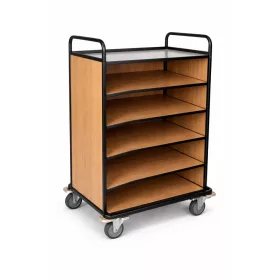
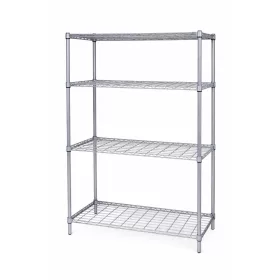
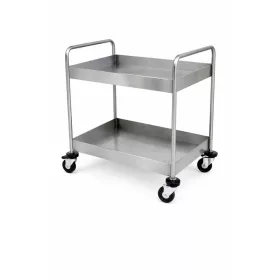
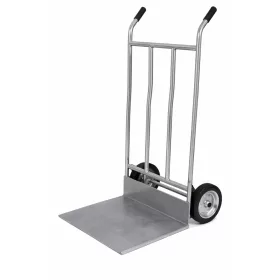
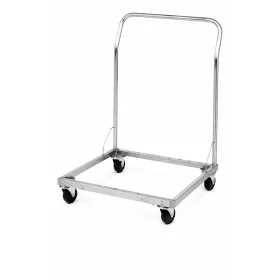
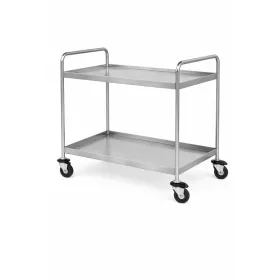
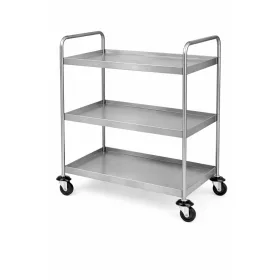
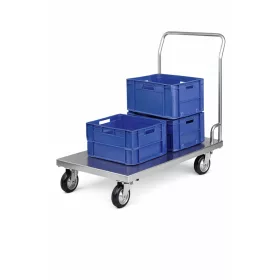
Kitchen and internal transport trolleys – brings together the shelf trolleys, platform trucks, container and crate carriers used to move goods between the delivery bay, the stores, the kitchen and the outlets. Typical construction is stainless steel or coated tubular steel with two or three shelves, a load capacity stated per shelf, and castors selected for the floor type. Selection follows the heaviest load actually carried, the distances involved and whether the unit is washed down as part of kitchen cleaning.
When asking for a quotation, give the typical and maximum load, the floor surfaces and any ramps or thresholds on the route, and whether the trolley is cleaned in a wash-down area. Shelf dimensions, load capacity per shelf, castor type and material grade are shown in the technical description of each model.
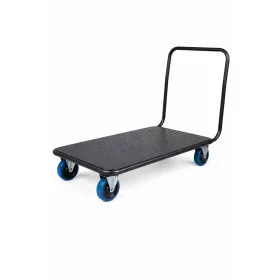
Kitchen and internal transport trolleys: procurement considerations
- Load capacity: quote the heaviest realistic load rather than the average, and check whether the figure applies per shelf or to the whole unit.
- Material and hygiene: stainless steel suits wet kitchen areas and wash-down cleaning, while coated steel is adequate for dry stores and corridors.
- Castors and floors: resilient tread castors with at least two braked wheels handle tiled kitchen floors, drainage channels and loading-bay ramps.
- Shelf layout: the clear height between shelves determines whether crates, GN containers or stacked boxes actually fit, so check it against your own containers.
Frequently asked questions about this category
What load capacity should we specify?
Base it on the heaviest load the trolley will genuinely carry, then allow a margin; overloading is the most common cause of bent shelves and failed castors.
Are these trolleys suitable for wet kitchen areas?
The stainless steel models are; for coated steel versions check the technical description, as regular wash-down will shorten the life of a painted frame.
